

February 12, 2026

Emergency room is bleeding out – Staff demands immediate action

Date

February 12, 2026

share

The safety of staff and patients in the emergency department of Landspítali in Fossvogur is threatened every day. Infection control, fire protection or personal protection cannot be guaranteed. Staff and patients are therefore in a situation where the risk of infections, accidents, violence and other serious incidents is obvious and ongoing. This situation has been clear for years but has been ignored by health authorities. Action must be taken now, otherwise the consequences will be on an unprecedented and catastrophic scale.


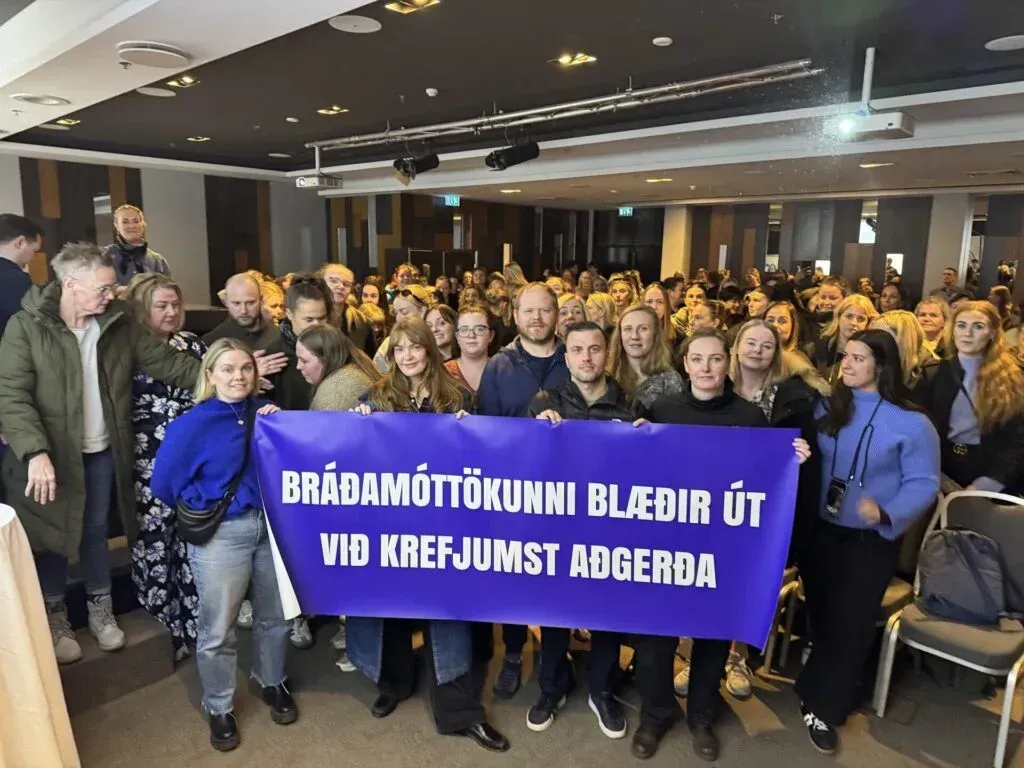
This was among the things that came out at a joint meeting of emergency room staff unions held on Wednesday, February 11. The meeting was attended by Efling, the Icelandic Nurses' Union, the Icelandic Medical Association, the Icelandic Nurses' Association and Sameyki. There was a huge crowd at the meeting, about 180 people, and the sound was heavy.


At the meeting, the emergency room staff described the situation there in such a way that no one listening should be misled into thinking that there was an emergency there. The department's response capacity is paralyzed due to the large number of hospitalized patients there, who should be transferred to appropriate inpatient wards in the hospital. Staff expressed fatigue, anguish, sadness and anger at the situation, but also pride, solidarity, and a desire to be able to do their work in decent conditions. The demand is that the competent authorities immediately respond to previously reported information about the situation and immediately make improvements, for the benefit of staff, patients, relatives and society as a whole.


The meeting unanimously, with loud applause, adopted a resolution describing the situation and calling for action. The resolution can be read below. 


RESOLUTION OF THE EMERGENCY DEPARTMENT STAFF MEETING OF THE COUNTRY HOSPITAL

February 11, 2026


The conditions at the emergency room at the National Hospital in Fossvogur are so serious that they put the safety of patients and staff in immediate and unavoidable danger every day. This has long been public and acknowledged by the hospital's management, the Office of the Director of Health, and health authorities, without any adequate response. 


The daily number of hospitalized patients far exceeds what the premises, staffing and security systems can handle. The result is that neither patient nor staff safety, adequate infection control, fire protection or personal protection can be guaranteed. The hospital has been on the highest alert level for more than a year without the health authorities having responded. The inaction reflects the helplessness and laxity that the National Audit Office has pointed out. 


The Director of Health confirmed in a memorandum on June 2, 2022, that the emergency department did not meet professional standards due to overcrowding, excessive patient numbers, and understaffing, and that neither patient safety nor quality of service could be ensured. The Director of Health stated at the time that it was in fact best to close the department due to the dangerous and unacceptable conditions, but also acknowledged that this was not a realistic option since the department is one of its kind in the country and provides vital services. 


These serious statements by the Director of Health were ignored. Since then, the situation has not improved, but has worsened. 


Over 100 patients are typically housed in a space designed for 36. Isolation is impossible, agitated or unstable patients are not guaranteed safety, and oxygen tanks and other equipment are littered in the emergency room corridors with obvious fire and explosion hazards. This is a serious safety threat to staff and patients, and with this number of patients, the working conditions for staff are completely untenable.


The emergency department has long been treating hospitalized patients who should be in appropriate inpatient units. It is not the role of the emergency department to operate a double inpatient unit on top of emergency services. It paralyzes the emergency department's response capacity and prevents staff from having the privacy and peace to carry out their statutory duties of receiving and treating the injured and critically ill.


Staff are forced to work in conditions that go against their professional knowledge and accepted standards of good and safe healthcare. Such a situation is indefensible and has a lasting and negative impact on staff and the quality of service. 


Staff and patients are placed in situations where the risk of infection, accidents, violence, and serious consequences is obvious and persistent. 


In December, eight staff members were diagnosed with latent tuberculosis. This highlights the consequences of infection prevention and control measures not being in line with laws and regulations. Inaction in the development and investment in healthcare infrastructure has created a systemic problem that is now clearly and dangerously evident in the emergency department. 


We demand that the workplace comply with laws on health, safety and working conditions and that immediate action be taken, as there is an ongoing and worsening emergency situation and it must be addressed immediately.


We also demand that those parties with statutory responsibility respond immediately and follow up on comments, audits, and committee findings that have previously been made:


  • The Office of the Director of Health will monitor improvements based on the findings of an assessment of the department's conditions.
  • The Occupational Safety and Health Administration conducts a comprehensive assessment of employee facilities and responds to violations of occupational safety and health laws. 
  • Health inspectors will assess the situation with regard to hygiene and infection control. 
  • The fire department follows up on its assessment of the fire risk due to oxygen equipment and congestion. 
  • The Privacy Office will investigate the situation with regard to patient privacy and protection. 
  • Health authorities should conduct an assessment of patient harm and mortality with regard to length of stay in the emergency department.


The safety of patients and staff must no longer be a sacrifice. It is completely unacceptable that these conditions have been left unaddressed for years despite repeated warnings. Instead of promises, we demand improvements. Those who govern and monitor the healthcare system must take responsibility and exercise their power immediately.


Resolution sent to: 


The Office of the Director of Health,
Administration,
Reykjavík Health
, Capital Region Fire Department
, Data Protection
Officer, Director of the National Hospital
, Ministry of Health

Ministry of Finance 

Prime Minister's Office 

Welfare Committee of the Parliament 

The Budget Committee of the Parliament 

Copy: Media 

March 5, 2026
The Icelandic rental market is not an afterthought or a patch on the housing market. Many Efling members are in the rental market for the long term, and the problems of the rental market will not be solved by simply hoping that tenants will move into owner-occupied housing. This is the content of a resolution adopted at Efling Parliament on February 27, which calls for fundamental reforms to the Icelandic rental market. The resolution lists Efling union's ten demands for the Icelandic government to address the major problems in the rental market. The main demands include: Establish laws and regulations that limit sudden rent increases, support long-term contracts, and reward reliable tenants. Ensure regular inspections of rental housing to assess the condition and fair price. Lease agreements shall be in Icelandic krónur. Rent benefits shall be individualized, based on each tenant's income. Databases of tenants and landlords shall be established to promote transparency. Large-scale short-term rentals for tourists must be limited. The supply of rental housing must be greatly increased and the role of non-profit rental companies in such development must be ensured. A housing company for workers should then be established where it would be possible to acquire apartments through lease purchase. The resolution follows in its entirety below. Renting Icelandic authorities must face the fact that the rental market is not an afterthought or a band-aid on the Icelandic housing market. Numerous Efling members are in the rental market for the long term and have to rely on a rental agreement as a lifeline in their existence. The problems of the rental market will not be solved by simply hoping that tenants will move into owner-occupied housing. In a healthy housing market, people can choose between acquiring affordable housing or renting safely and economically. A humane, regulated and stable rental market needs to be established that is a viable alternative for working people, similar to that seen in our neighboring countries. Efling members make the following demands of the Icelandic government regarding the rental market: Far from enough has been done to curb the powers of landlords to make the existence of tenants a game. Laws and regulations need to be established that ensure fair and reliable restrictions on rent increases, encourage long-term contracts and reward reliable tenants who meet all the conditions of the lease. It must be ensured that the relevant authorities (e.g. HMS) can carry out inspections according to the powers that must be implemented to ensure that these regulations and laws are respected. Regular inspections of rental housing, for example every two years, need to be carried out so that the condition can be assessed, a fair market price can be determined and quality, safety and transparency in the rental market can be ensured. Lease agreements should be made in Icelandic krónur, not in foreign currencies. Landlords should be responsible for ensuring that the registration of tenants living in rental housing is accurate and up-to-date. Housing benefits should be calculated individually, based on each tenant’s personal income, rather than on joint income. Such an approach would be more consistent with Article 76 of the Icelandic Constitution, which guarantees individual rights to social assistance. It is also important to set up a database of tenants and landlords. Access to such information contributes to a healthy rental market by increasing trust and transparency in the process for both parties. In addition, access to an independent party that both tenants and landlords can turn to must be ensured, to record and preserve images of the condition of the apartment before and after the rental. Such registration can be used as impartial evidence and contribute to a fair settlement of the security deposit/deposit at the end of the rental period. The scourge of short-term rental of residential property for tourists needs to be tackled much more severely. Renting out a home for a short period of time within a year can be considered a secondary occupation for families. But this should not be a large-scale industry for investors and hustlers that sells off a significant portion of the residential property that the people of the country need to be able to live a safe and normal life. The supply of rental housing needs to be increased, as part of a more extensive, funded and timed housing plan by the government, prepared according to reliable forecasts and in consultation with the municipalities. The role of non-profit rental companies in this development needs to be secured, for example through Bjarg, which has proven its value as a concise resource for people on lower wages. A housing company for workers should also be established where there is a possibility of acquiring the apartments through rental.
March 4, 2026
The operators of the restaurant Italia have been sentenced to a three-year business ban. Elvar Ingimarsson and Björgvin Narfi Ásgeirsson, former owners of Ítalgest ehf, the restaurant's operating company, were sentenced to a business ban by the Reykjavík District Court on January 12. The Supreme Court has now upheld the district court's ruling. Efling union initiated proceedings due to abuse, wage theft and violations of rights at the restaurant Italia, as well as at other restaurants run by Elvar and Björgvin Narfi, in September 2024. The union drew attention to numerous and serious violations of the rights of workers at the restaurants in question, which had been ongoing for a long time. Efling Board of Trustees adopted a resolution at its meeting on September 12, 2024, condemning the abuse of labor and wage theft at the restaurant Italia. After the meeting, a solidarity action was taken on Frakkastígur outside the restaurant. Efling then collected testimonies from employees who had worked in their company's restaurants, gathered data and presented them to draw attention to violations against workers. This created considerable media debate. The company Ítalgest was declared bankrupt on October 9, 2024. Elvar subsequently tried to claim that Efling legitimate actions had led to the bankruptcy. This was untrue, as a request for bankruptcy of Ítalgest had been submitted a week before Efling actions began. It therefore clearly showed the kind of impasse its owners had put the company in, with irresponsible operations and violations against employees. The District Court's judgment, and the confirmation of the Supreme Court, confirm the kind of violations that took place in the company's operations. The administrator of the bankruptcy estate of Ítalgest, Björn Þorri Viktorsson, demanded that Elvar and Björgvin Narfi be banned from business operations due to their involvement in the company, whose operations were more reminiscent of organized crime than restaurant operations. Thus, numerous unexplained payments were found from the company into the personal accounts of the partners, or to people with family ties to them. Claims against the bankruptcy estate amounted to around 116 million krónur, but almost no assets were found in it. Therefore, the partners, Elvar Ingimarsson and Björgvin Narfi Ásgeirsson, were sentenced to a three-year ban on business operations, which is the maximum penalty under the law. Efling welcomes the fact that what appears to have been organized, long-term criminal activity by the partners is being addressed. It is unacceptable that people can get away with violating workers for so many years, without any consequences. Here you can see Efling coverage of the criminal activities of Elvar Ingimarsson and Björgvin Narfi Ásgeirsson.
March 3, 2026
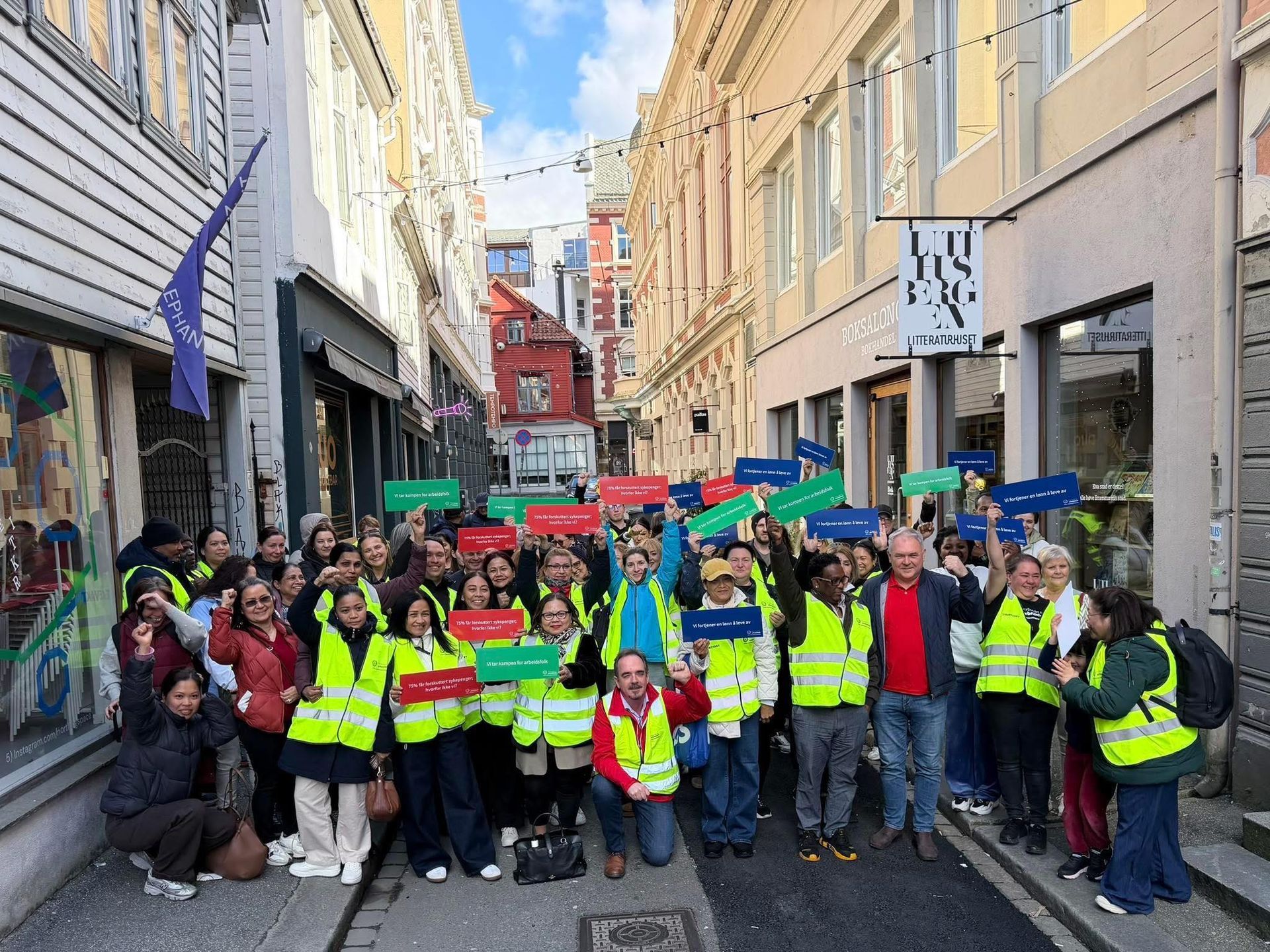
Guests, both foreign and domestic, addressed the session and contributed to the discussion, and their presentations attracted attention and sparked further discussion among the attendees. The accompanying photos from the session provide an insight into the atmosphere, from the work on issues and professional groups to the guest addresses.
Show more news