


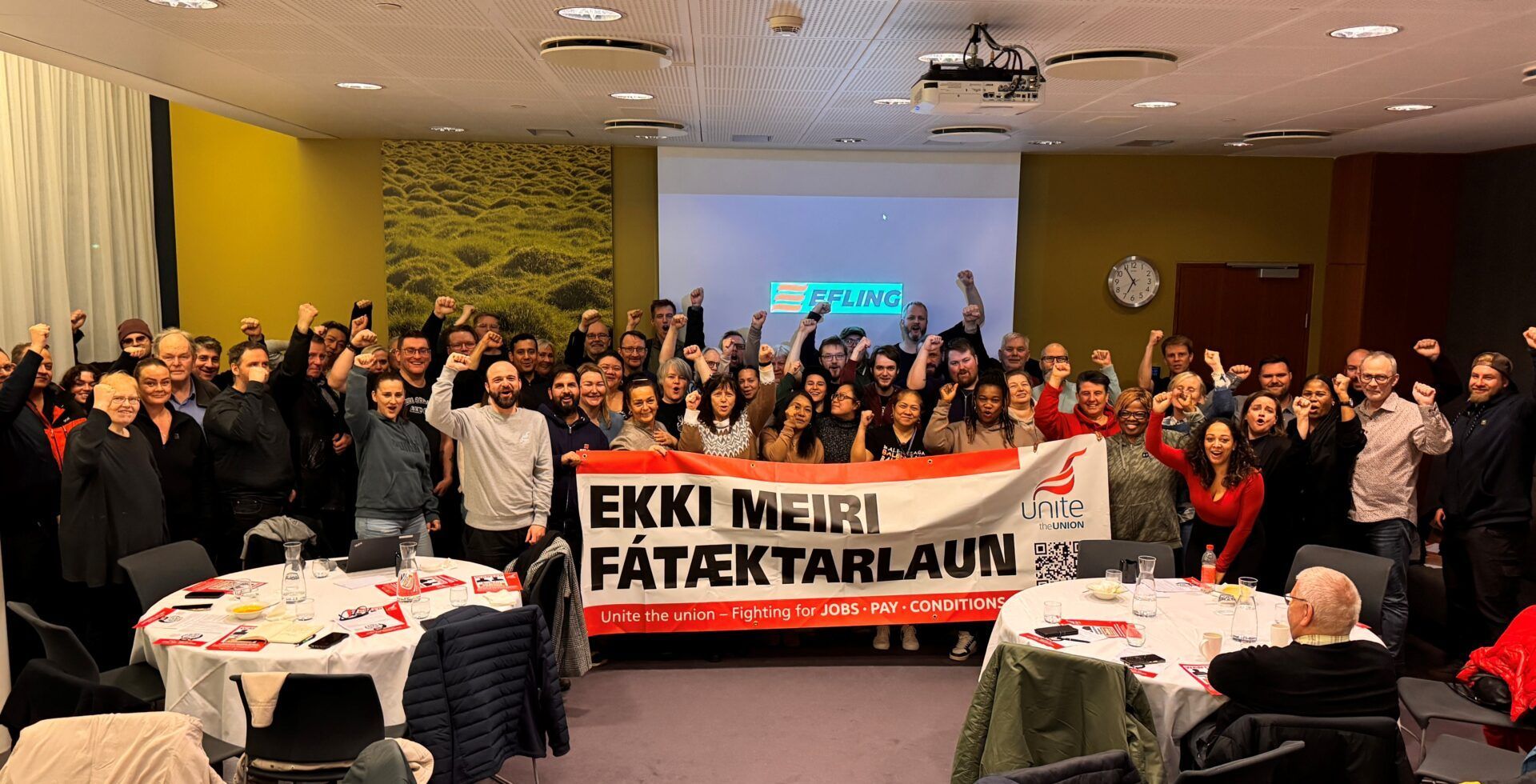
Placeholder for the subtitle of your entry
Placeholder for the entry content. This is where the content of your blog post goes. To add tags and customize text and images for individual entries, go to Manage entries. From there you can edit the current entry or add a new one.
About 40 percent of Efling members live with a lack of material and social goods, in other words they live in poverty. The situation of Efling members is considerably much worse than the situation of staff in other member unions ASÍ and BSRB, but about 20 percent of them experience a similar lack.
This appears in the Vörðu report, the research institute of the labor market, on the status of wage earners in Iceland. The results clearly show that the financial situation of Efling members is generally much weaker than that of other social members of the trade unions.
Overall, about 45 percent of Efling members find it difficult to reach consensus, and of those, about 8 percent find it very difficult. For comparison, 28 percent of staff of other unions within ASÍ and BSRB find it difficult to reach consensus, of which 3.5 percent find it very difficult.
Only about 40 percent of the union members Efling consider themselves able to meet unexpected expenses of 100 thousand kronur, without having to go into debt. Other wage earners consider themselves much better placed in this regard, but almost 64 percent of them think they can meet such expenses.
A quarter does not have the means for a substitute meal every other day
When looking at the classified material shortage in household management, a very clear difference emerges in the situation of Eflingfélaga and members of other trade unions within ASÍ and BSRB, Eflingfélögum are in a very poor state.
- 27% Efling members do not have access to a car, compared to 7% of other wage earners.
- 24% Eflingfélaga do not have meat or fish every other day, compared with 12% of other wage earners.
- 25% Efling members cannot pay all bills in a single day, compared to 8% of other wage earners.
- 52% of Efling members cannot replace worn furniture, compared to 30% of other wage earners.
- 36% of Efling members do not have material resources at home on an annual basis, compared to 23% of other wage earners.
A staggering fifty percent of Efling members do not have two pairs of shoes
When it comes to what is classified as material deprivation, the situation improves mainly concerning the difference in the status of Efling members compared to members of other unions within ASÍ and BSRB.
- 17% Efling members do not have two pairs of shoes, whereas others are waterproof, compared to 8% of other wage earners.
- 23% Efling members cannot replace worn clothing, compared to 9% of other wage earners.
- 53% Efling members have no time to engage in leisure activities or hobbies, compared with 33% of other wage earners.
- 41% of Efling members cannot set aside a little money for themselves weekly, compared to 33% of other wage earners.
- 44% of Efling members do not have the means to meet friends or family for a drink or meal monthly, compared to 34% of other wage earners.
Over seven thousand Efling members experience significant shortage
In assessing whether people experience a lack of material and social goods, it is summed up in how many factors people feel a lack. If people experience a lack in 5-6 items out of thirteen, it is considered a general lack, but if the items are 7 or more, there is a considerable lack.
- 20% Eflingfélaga do not experience any shortage, compared with 38% of other wage earners.
- 17% Efling members experience general shortage, compared to 11% of other wage earners.
- 22% Efling members experience a considerable shortage, compared to 10% of other wage earners.
In view of the above, it is clear that the status of Efling members in Icelandic society is both serious and significantly worse than that of other salaried workers. There is no way to sugarcoat it; the results of the Vörðu survey show that about 13,000 Efling members are trapped in poverty and lack both material and social quality. Of these, roughly 7,000 experience a substantial deficit. Furthermore, the situation of approximately 5,000 other Efling members is also dire, and it takes little to cause them to also fall into the same poverty.