


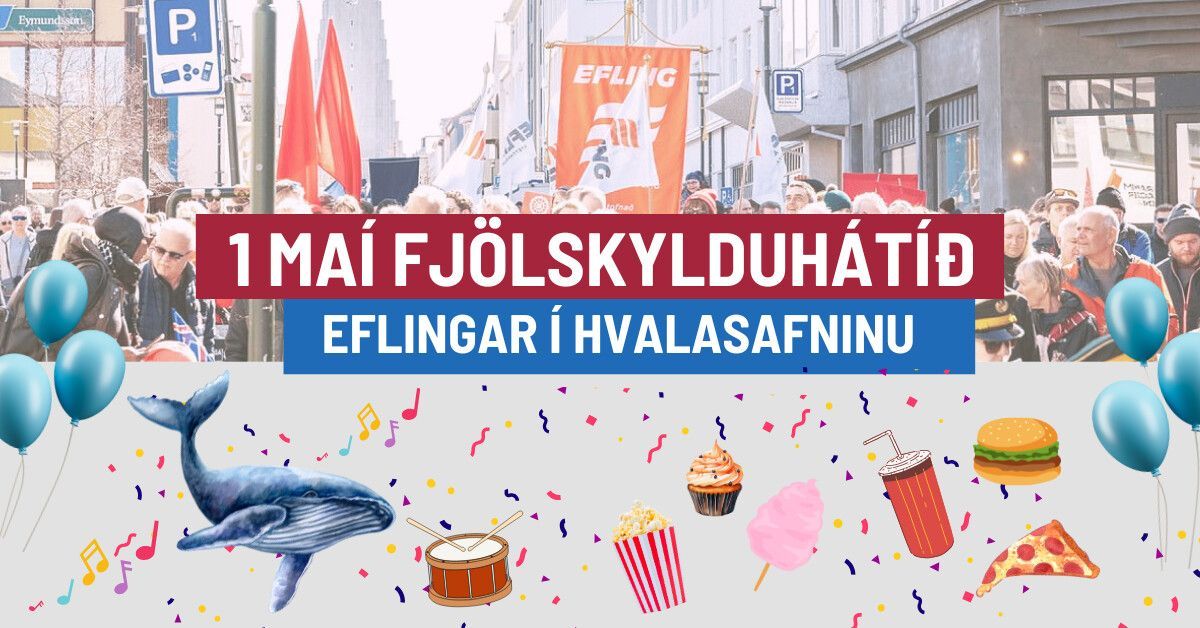
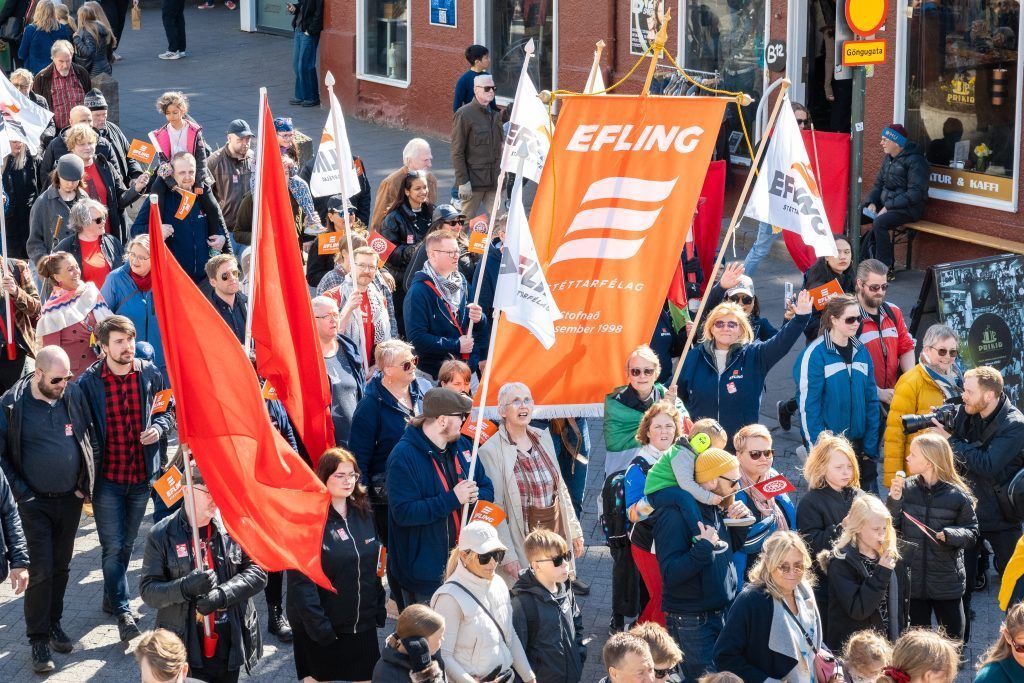
Efling union is throwing a big family celebration for its members on Labor Day, May 1st. The celebration will be held at the Whales of Iceland Museum at Fiskislóð 23-25 in Reykjavík and will begin at 3:00 PM, following a protest march and outdoor meeting in the city center. A wide variety of food will be served, but the following food will be available: Pizza Hamburgers Donuts Donuts Ice Cream Candy Pops Coffee and cakes Then the fun will not be bad. Below you can see the highlights, but the list is by no means exhaustive: Dj Sunna Ben will keep the party going The Labor Union's brass band will play for guests Incredible circus acts The balloonist comes and balloons Face painting for the children Photo booth The ticket to the family entertainment costs only 500 krónur and everything is included in the price. Each Efling member can buy up to five tickets. Tickets are on sale in the Efling online store on My Pages and will start on April 17th. Wristbands that grant access to the entertainment must be picked up at the Efling office in Guðrúnartún 1, before April 30th. First come, first served.
European trade union organisations and European employers' organisations in the cleaning, catering, security and real estate sectors, food services, tourism and agriculture sectors have issued a joint statement calling for radical changes to EU public procurement rules. The statement is signed by FoodServiceEurope, EFCI, CoESS, EFFAT and UNI Europa Property Services. These are both employers' organisations and trade union organisations in Europe. Efling is a member of UNI Global Union, the international umbrella organisation of trade unions, of which UNI Europa is a part. The statement is a response to the ongoing review of the EU directive on public procurement rules and was submitted to the consultation process of the EU Commission at the end of January. With the statement, the organisations in question hope to try to influence future new EU legislation. Tendering at the expense of workers The statement paints a clear picture of serious weaknesses in the current regulatory framework. Public procurement, which is supposed to ensure quality and accountability in public services, is in fact too often based solely on choosing the lowest price. The result is fierce competition at the expense of workers, as companies compete to offer the lowest possible price for a project. Such offers are often far below the actual cost. According to data from the European Union, about two-thirds of public contracts of this type are without any conditions for social responsibility. This means that in the majority of cases, it is not guaranteed that companies that sign contracts with public entities respect collective agreements or offer decent working conditions. This weakens collective agreements and encourages dumping and poorer service. This development is well known in this country and directly affects Efling members. In cleaning, canteens and other services where wage costs are the largest expense item, competition in tenders has repeatedly led to downward pressure when it comes to wages and working conditions. The current regulatory framework simply encourages this. Would it have an impact on Iceland? If the suggestions presented in the statement are taken into account, it will be of significant importance to Efling members, due to Iceland's membership of the EEA Agreement. The European Union's rules on public procurement are part of the EEA acquis and therefore have a direct impact in this country. Changes that are approved within the EU in this area will therefore, in one way or another, find their way into Icelandic law. Developments in Europe thus shape the rules of the game that also apply to the Icelandic labor market environment. The statement points out that the lack of clear rules that inhibit "abnormally low bids" allows companies to bid below cost in order to win contracts. The only way for companies that receive such contracts to benefit is by reducing wages, even by violating the provisions of collective agreements, or by assigning tasks to far too few employees who work under unacceptable working conditions. It is also criticized that contracts often do not take into account wage increases, inflation or rising operating costs. Companies that have received the contracts in question therefore have only two options, they are forced to either absorb cost increases or cut back elsewhere. This primarily affects employees and the quality of service. The organization presents clear demands for changes. Conditions for participation in public tenders should be set such that companies respect collective agreements Bids should not be accepted solely on the basis of price Quality of service and working conditions of workers should be given greater weight when selecting bids A clear definition of what constitutes abnormally low bids should be set Ensure that agreements take into account wage increases and inflation The statement also emphasizes that increased dialogue should take place between public buyers and social partners before tenders begin, so that realistic conditions and quality of service can be ensured. The situation is serious What makes this statement particularly noteworthy is that it is a joint position of both unions and employers. Such consensus underlines how serious the situation has become. When both social partners are calling for the same changes, it is clear that the system is not working. For Efling these are key issues. The current arrangement in public tenders encourages dumping, weakens collective agreements and undermines the rights of members. Changes to the aforementioned tendering rules could, however, have a significant impact for the better, by strengthening workers' rights, improving working conditions and ensuring better and safer services for the public. The fight for fair tendering is therefore not just a technical issue within the European Union, but directly a wage issue for Efling members.
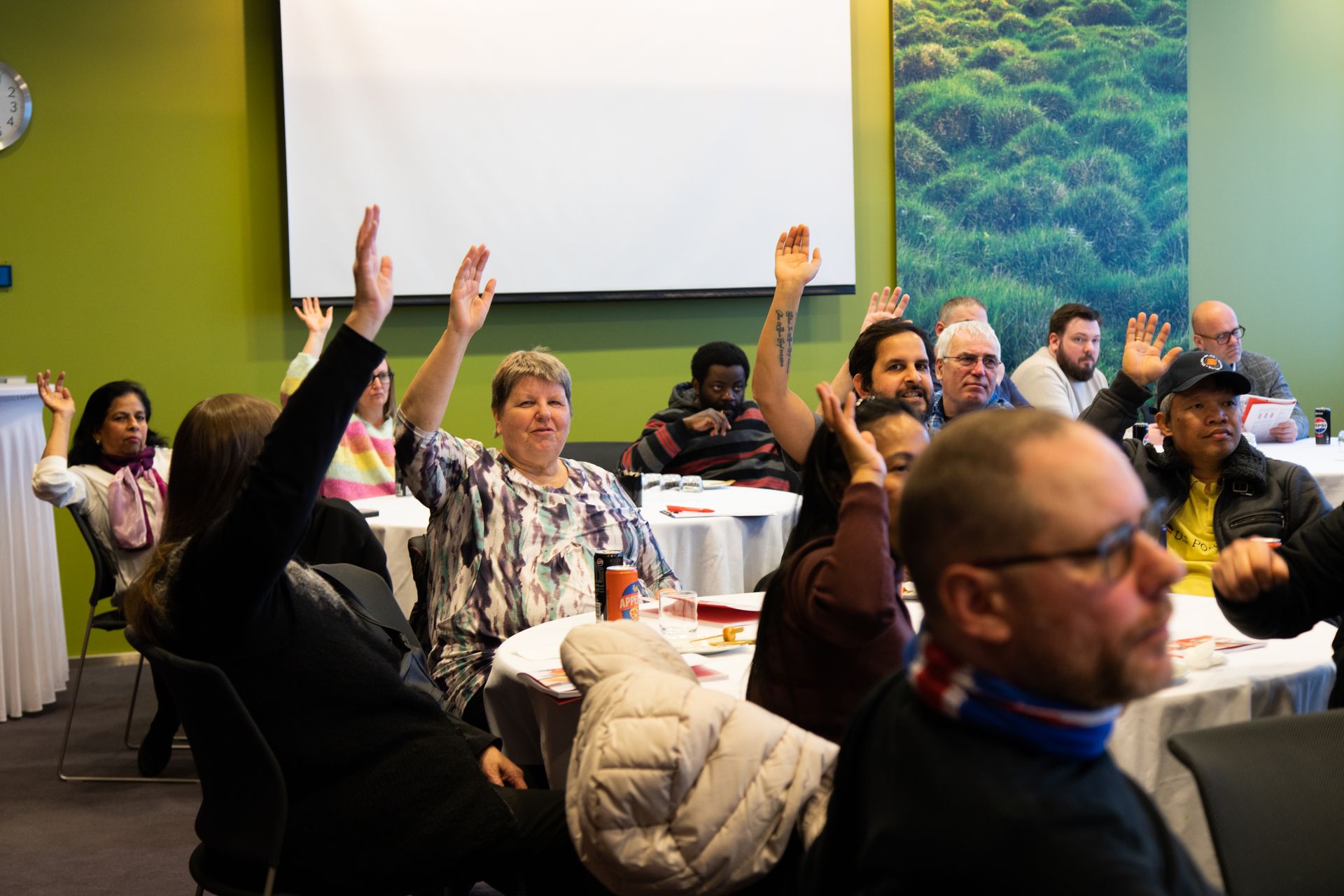
Efling union's annual general meeting took place at the Hilton Reykjavík Nordica yesterday, March 26, and was well attended by members. In her address following the board report, Sólveig Anna Jónsdóttir, chairwoman Efling , went over the whole stage and emphasized that the struggle Efling members was far from over, in fact it would never end. "We have achieved success - and we should be proud of what we have achieved together. But at the same time, we must face the many problems that are still unresolved," she said. Sólveig Anna harshly criticized the housing situation and the impact of high-interest policies on workers. She pointed out that a large portion of members were forced to spend the majority of their income on housing costs and that this would not be resolved. "We have rejected the idea that we can wait for justice. We must seek it ourselves," said Sólveig Anna and emphasized the importance of solidarity and the independent voice of workers. She then warned against planned changes to unemployment insurance, saying they send a “terrible message” to those who need support the most. She also criticized the lack of sanctions for violations of collective agreements and called for legislation against wage theft. At the end of her address, she emphasized that workers’ patience would run out if real action was not taken. “Either employers and the government listen to our demands and respond with real action – or the consequences will be serious as soon as this fall.” Strong financial position and growth Perla Ösp Ásgeirsdóttir, Managing Director Efling , presented the company’s accounts, which show a very strong position. Revenue increased by almost 16% between years and amounted to just over 4.2 billion krónur. Profitability improved significantly and the operating result for the year amounted to 722 million krónur. The company’s total assets increased by almost 1.5 billion krónur and equity now stands at around 17.6 billion krónur. It was also noted that costs had increased less than expected and that the company's operations were characterized by restraint and responsibility. In the case of Perla, it was stated that strong emphasis had been placed on strengthening services to members and building infrastructure for the future, including through investments in housing, information technology and holiday homes. Election of the board of directors announced Þórir Jóhannesson, Vice Chairman Efling , presented the results of the nomination committee. Since no counter-nominations were received, the company's board of directors was elected automatically. The Efling Board of Directors is now composed of the following: Chairman: Sólveig Anna Jónsdóttir Vice Chairman: Þórir Jóhannesson Secretary: Guðmunda Valdís Helgadóttir Treasurer: Michael Bragi Whalley Co-chairmen: Alexa Tracia Patrizi Gréta Íris Karlsdóttir Hjördís Bech Ásgeirsdóttir Hjörtur Birgir Jóhännuson Hlynur Gauti Ómarsson Ian Phillip McDonald Karla Esperanza Barrlaga Ocon Mary Jane Gonzales Munoz Rögnvaldur Ómar Reynisson Sigurjón Ármann Björnsson Sæþór Benjamín Randalsson Thanks to the outgoing board members The meeting also included farewell to the outgoing board members, Guðbjörg María Jósepsdóttir, Innocentia Fiati and Olga Leonsdóttir. They were thanked for their work and welcomed with thunderous applause, as the meeting attendees rose from their seats to thank them for their work. Bylaws approved Proposals for bylaws were also submitted at the meeting. They concerned the merger of two funds within the company and were approved unanimously without comment. The general meeting thus confirmed both Efling strong financial position and a clear policy in the wage struggle, with an emphasis on increased workers' rights and a tougher response to the challenges facing the labor and housing markets.