February 26, 2026

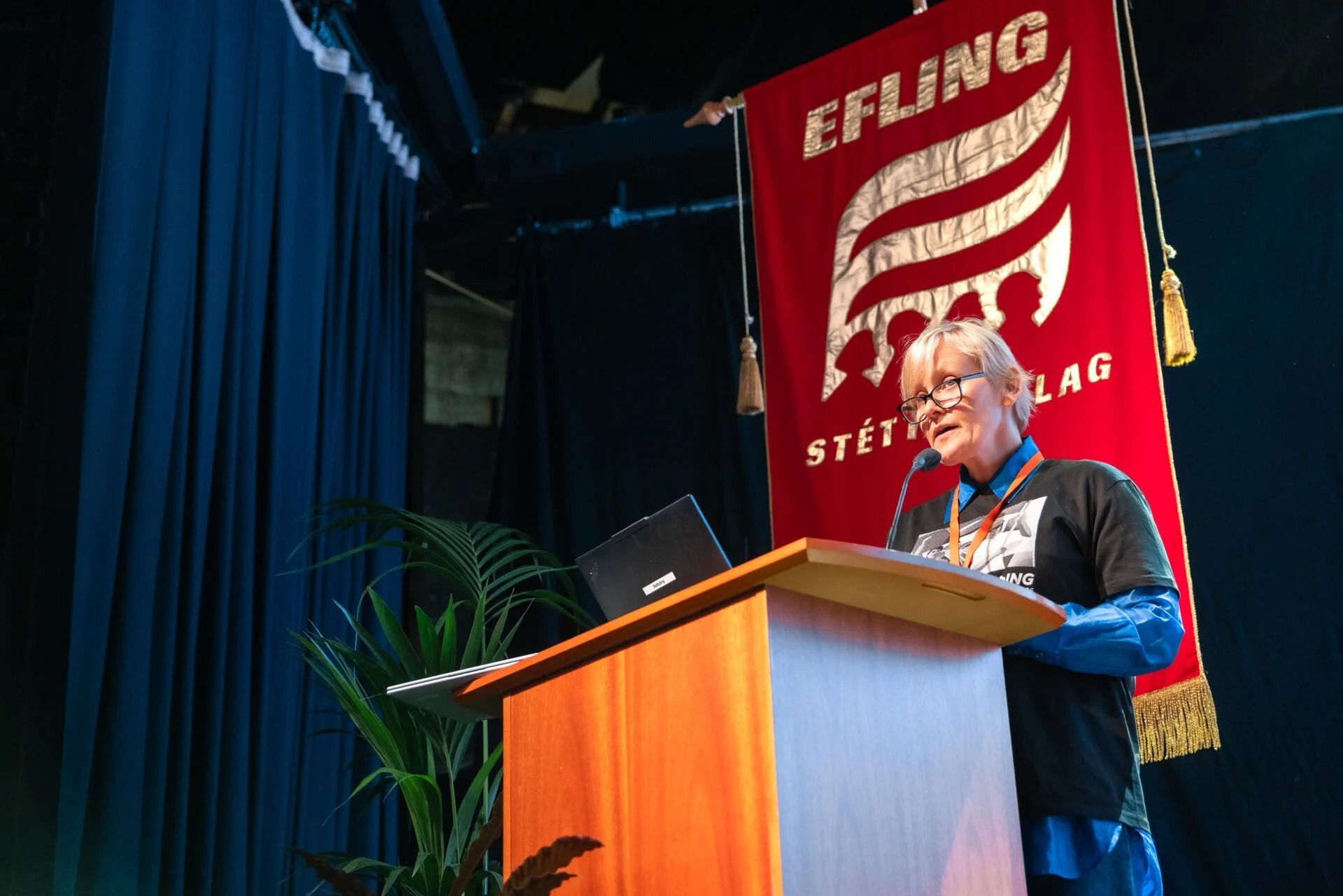
"We are unstoppable" – Address by Chairman Efling at the opening Efling Parliament

Date

February 26, 2026

share

Good day, dear friends.


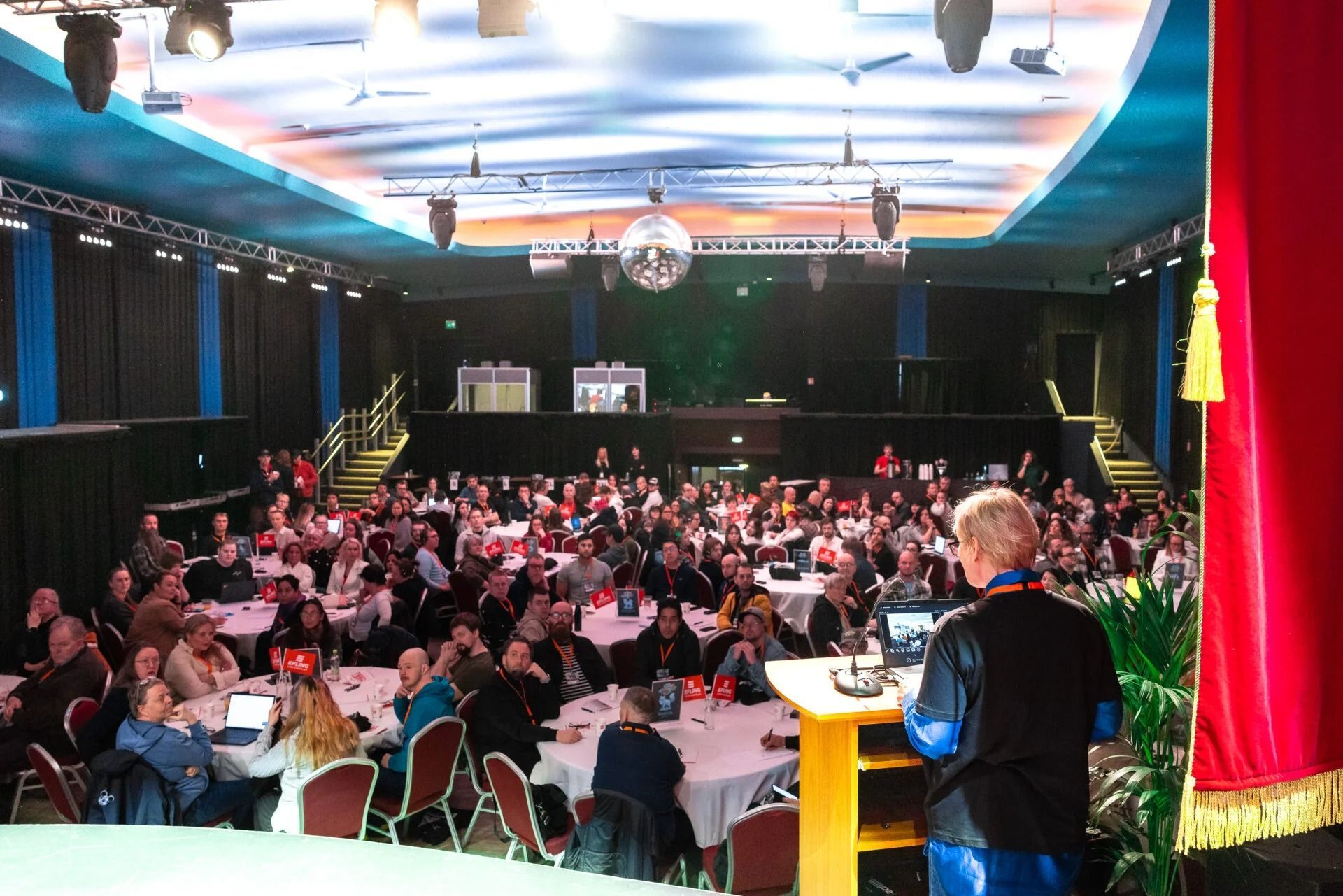
I warmly welcome you all to the first Efling Assembly ever held. I am deeply delighted to be here with you – indispensable people in all of society’s value-added production, indispensable people who maintain the welfare systems of the capital region, indispensable people in our trade union, Efling .

Before I say anything more, I would like to ask you to do one thing. I would like to ask you to pause and look around you, across the hall. I would like to ask you to look at the people sitting at the same table as you – and at the people sitting all around you. Look at this large group – a diverse group – an amazing group – a strong group. I look at you and I feel proud to be in the same trade union as you – proud to be the chairman of our union, the largest union of workers in Iceland – the most powerful union of workers in Iceland – with the most powerful members. What we see here when we look around us are not just individuals – no, we see something much more powerful. We see people who keep society going with their work. Fundamental people in our society. Fundamental people in the fight for a just Iceland.

Dear friends.

Since we began in 2018 to transform Efling from a closed office building where our voices as working class people were not to be heard – into an open and democratic community Efling people where everyone is welcome, we have had the good fortune to always look at what unites us – never what divides us. We live in a world where we are constantly being told that it is best for people to divide themselves into smaller and smaller groups – groups based on gender, origin, skin color, religion, sexuality, and so on – a message that we should not build bridges between workers but rather build walls – walls that keep us at a distance from each other and thereby reduce our chances of succeeding in the fight for a better life for ourselves and our families.


At this first Efling þing, as in our other work, we reject this view completely – once and for all. We come together here to remind ourselves, and Icelandic society, of one of the most important facts of our lives: We are strongest when we stand together – work together, fight together, win together. We are strongest when we recognize and remember what unites us – that we are the workforce of the capital region – the people who drive the wheels of business and create economic growth. We certainly intend to have a pleasant gathering here – we intend to meet old friends and make new ones – eat and drink together, joke and laugh. But we intend, first and foremost, to have serious discussions about serious issues – issues that affect all of our lives because of our position in society. And we intend to jointly shape the company’s position on the big issues that matter most to workers – that have the greatest impact on our lives and living conditions.

Because the fact – as we all know, of course – is that we face numerous and serious problems and obstacles – obstacles that arise from the class division of society and the inequality that inevitably accompanies it, even in countries that pride themselves on Nordic welfare.


But the fact is also – we all know this – that workers always face obstacles – then and now. The ruling class of society always tries to do its part to prevent recognition of what should be an indisputable truth: Work – labor – creates the value of society. When we look back, we see that the story of workers both here and in other countries, countries from which many of you come, is not a story of easy life and privilege. No, this story is a story OF struggle. A story OF sacrifice. It is a story of people who lacked power and wealth, who faced what seemed insurmountable obstacles but who managed, by virtue of solidarity and an unwavering conviction that labor was the source of all wealth and progress in society, to forge their way forward, without giving up – for the benefit of the communities they built – of all . Such solidarity, such conviction and faith is what we must base all our struggles on – then, like those who went before us, we will also succeed. Like them, we say: Only the struggle of the workers themselves can create the pressure needed to move closer to justice. Employers and governments will never show workers the respect they deserve until the workers themselves come together – as a large and organized group – and demand this respect from them.


Dear friends.


The history of workers and the struggle of the working class is not just an old or distant story. It is also our own experience – it is also the story of the last few years, the last month – yesterday. Let us think about what we have achieved together in the last few years. Let us look back and hold our heads high – we are the vanguard of the Icelandic labor struggle. It is a fact that no one can deny.


Here behind me we see pictures of what we have been doing since 2018. We have not been sitting idle – far from it. An incredible amount of things have happened in our days – so much that there is no way to go over it all here. But we will take the time to look at a few events – for example, we look back to 2019: Then we began the first strike action by workers in the capital area in many decades on International Women's Day on March 8, and the first strike action in Icelandic history carried out by hotel maids. On that day, nearly one thousand hotel maids – mainly immigrant women, from all over the world – walked out of their workplaces, where they showed up every day to produce value for hotel owners in the capital area – walked out together after voting for a work stoppage, with 89% of them saying yes to a strike.


The strike on Women's Day on March 8, 2019 was just the beginning – there we managed to rekindle the embers of a real labor struggle in Iceland – embers in a bonfire that everyone thought had burned out – a bonfire that we fanned with our strength and willpower. The winter of 2020 showed the members of Efling who work for the City of Reykjavík, indispensable people who keep the city running with physical and mental hard work in kindergartens, home care for the elderly, in shelters, garbage collection and so on, the heroes of the City of Reykjavík, to the entire community how the power of solidarity works. When the city's bargaining committee did not listen to our demands to lower the minimum wage and correct historically undervalued women's jobs, we held a vote on strikes – 95.5% said yes to closing down! The whole city felt our power and importance; The city is in our hands, we said, and we proved it so that no one could deny it: Almost all the city's preschools closed, and no one could doubt the importance Efling staff who keep them going every day with their work.


And at a time when most people would give up and admit defeat, Efling members have not hesitated – they have continued – with the storm in their arms. In 2023, we were faced with the union movement, employers’ associations, the government and the state mediator joining forces in an attack on our legally binding and constitutionally protected right to make our own collective agreements. The then state mediator tried – with the support of the most powerful people in society to force us to obey – dragged us to court to try to remove our membership in order to carry out an illegal vote on an illegal mediation proposal. An attempt was made to steal our democratic rights – an attempt was made to undermine the legitimacy of our own decision-making about one of the most important things imaginable – the price of our labor. Everything was tried – but the battle went so that the members Efling stood tall and unyielding, while the state mediator and the CEO of the Confederation of Icelandic Employers had to resign – a loss of all trust after sacrificing their reputations to try to beat us into submission. This winter we showed everyone that real democracy lies in the strength of workers and solidarity – not in the offices of corrupt and pathetic bureaucrats on the side of the capitalists.


I'll quickly go over the history here – we don't have time to discuss everything that has happened in our days – but I must mention the struggle Efling people working in the capital's nursing homes last winter – the solidarity in that group was amazing and yielded significant results for more than 2000 Efling members – with special additional increases like we achieved with the City of Reykjavík in 2020.


There we made the first independent collective bargaining agreement for the huge group of essential people who work in nursing homes – the reason for the success was that a brave and disciplined group of Efling members led the negotiations and never gave up. Such power cannot be defeated. 

Dear friends.


In recent years, we have not only had to fight employers and the Icelandic ruling class – we have also had to deal with numerous problems within the labor movement – ​​problems related to the fact that the movement had abandoned real labor struggle and was instead busy ensuring an even better quality of life for the well-off – ensuring that workers did not negotiate collective bargaining themselves, but that it was entirely in the hands of university-educated experts and their Excel calculations. Our fighting spirit and militant approach to the class struggle exposed a profound ideological disagreement about how best to fight. That exposure was necessary and long overdue. From the first moment in 2018, we faced great opposition – and from day one we have had to make difficult decisions in all our work within the working people’s movement. The first question we had to answer was this: Are we going to let the office fortress capture us and lock us in so that the status quo can be secured, the continuation of the powerlessness of workers within the Icelandic labor movement – ​​or are we going to challenge deep-rooted and harmful traditions and practices that do not serve the interests of workers, work against the interests of workers – are we going to go our own way, independent and bold? Our answer – we are going to go our own way – caused a huge uproar and caused us great problems – but we never deviated from the path we wanted to take and did not give up. That is why we have managed to create a real front for ourselves, that is why we finally enjoy respect – that is why no one can now silence our voice. We broke the silence that had fallen on the labor struggle in the capital area – we refused to remain silent, in a corner, at the back of the line. We rejected the idea that the only role of labor was to toil so that others could have a good time. We rejected the old leadership and the corruption and self-importance that had become entrenched in our society. We changed the conversation – we stepped out of the shadows and into the spotlight – united, strong, proud. We rejected whining and complaining, being victims, having a hard time – we said it loud and clear so that everyone had to listen: “We create value – we are indispensable”. We are the force that can stop everything – and that is why we are the force that moves society forward – makes it better – makes it – makes it more equal – makes it more just.


———–


Dear friends.


The story I have briefly recounted here proves one thing without a doubt: when we come together, organized and fighting, we are strongest. And as we have organized ourselves and made our association the leading workers' organization in Iceland, we have always found time to come together in friendship, joy and fun. Christmas parties, May Day celebrations, food and culture – such togetherness with friends and families is also what binds us together in respect and friendship – it becomes an inspiration for us when we need it – when we have to deal with difficulties and problems.


Dear friends.


It is important that we are all on the same page about what our parliament is and what it is not. If we look at the Efling , there is no mention of Efling parliament and therefore the parliament has no formal status. The parliament is really an experiment – ​​a journey into previously uncharted territory – initiated by the board of the association in cooperation with the board of trustees.

And now, as our parliament is being convened, I cannot help but be filled with anticipation. 200 Efling members have come here as parliament representatives. The majority are already active in the social and political work of the association. Trustees, board members, representatives of the board of trustees, people who have participated in collective bargaining, strikes – struggles – come together to discuss important, highly political issues and reach a conclusion.


We are experienced people, and we know that it is rare for everything to be perfect the first time around. We may have to deal with minor organizational issues here at the Parliament – ​​and there will undoubtedly be times when we need to work together to figure out something we may not have foreseen. That is why it is important that we show each other patience – be constructive and friendly first and foremost. We are not going to fight and argue – we are going to talk and listen to each other. If things don’t go exactly as planned, we don’t make a big deal out of it – we focus on finding a solution together and moving on.


If things go well for us today and tomorrow, which I am actually convinced they will – then I do not think it is unlikely that Efling þing will be held again and can become a powerful part of the democratic awakening of our society.


Dear friends.


I am fully aware that there are a huge number of issues that are pressing on us as members of Efling . The cost of housing, for both tenants and owners, weighs like a sore thumb on Efling members and families. Wage theft and breach of contract are ongoing problems that the ruling class refuses to face – because its members are not exposed to the crime. Workplace conditions and the many problems we have to deal with there are harmful to our lives – reducing our quality of life by causing worry, stress and insecurity. These are the issues that we will focus on. Efling board and the board of trustees have put a lot of work into the preparations in the run-up to the assembly – the chairman encouraged the board of trustees to express their wishes on which issues should be discussed and based on the responses and information, the board of the association chose the four issues that are available today:

  • Housing: Situations of buyers and owners.
  • Housing: Tenant conditions.
  • Wage theft and violation of collective agreements.
  • Empowerment in the workplace.


But despite these four issues, we can – and in fact we should – discuss everything that matters to Efling members. This is our parliament, our space and our union. We intend to have open and honest conversations about member issues – maybe not about everything – we may save that until the parliament party… but about almost anything!


But I ask for your understanding regarding this: To maintain focus and ensure that the outcome of the parliament's work is absolutely clear, we all agree that the aforementioned four issues are the main focus.


We have as a starting point four well-developed proposals on these issues, formulated by the Board of Trustees after extensive discussions. It is important that we focus our collective energy on delivering strong, unanimous or near-unanimous statements from the work of the groups. The goal of each group in the group work is to strive to achieve consensus by allowing all voices to be heard.


But I want it to be clear that even though ideas and discussions do not become resolutions here at the assembly, it does not mean that nothing will happen about it. Here at the assembly, there are group leaders and secretaries and their role is to write down all ideas and speculations, even if they are not directly related to the content of the resolutions, because we want to have reliable sources of everything that burned in the hearts Efling members at Efling assembly in February 2026, so that the board and the board of trustees can continue to work on it in their future work.


I'm just going to say a few words about democracy. It's often pretended that democracy is nothing more than rules and laws and votes every few years. Of course, all of this is very important – but the fact is that real, living democracy is a combination of two fundamental elements; formal rules and then the participation of people in discussing and shaping what ultimately matters – which is the conclusion about where to go, for what purpose and by what methods. And for that to happen, people need to feel that they are being listened to! – that they are welcome in the discussion! – people need to feel respected! – and that it is quite obvious that their voice matters!


We in Efling can have the most perfect laws in the world, but if our members do not feel welcome, if they do not feel that their voices and opinions are not taken seriously, then we have failed miserably. Then the laws are not even worth the paper they are written on: Because democracy is about building real participation – about creating spaces like here today and tomorrow – where people WANT TO PARTICIPATE because they know they are being listened to!
Therefore, as we begin this historic session, we will all stand together in remembering this: We discuss the issues with passion and we express our opinions with determination – we may disagree, that is how we practice speaking and listening, explaining and understanding – that is how we sharpen our ideas and positions. But we are not going to forget – we are never going to forget – that we are on the same team, today and tomorrow – that is how we can be on the same team every day.


For the struggle ahead, like the one behind, will require unity and profound solidarity. It will require us to look at all the many and real obstacles in our way – the capitalist class that thinks it can control everything and own everything, a political class that would rather serve the interests of the rich than ensure a just society, employers and bosses who want to get their way without regard for what WE want and what WE need – and say, so loudly that no one can be unheard, no one can be unheard – with one voice:


We are the workforce.


We create the value.


We are indispensable.


We are Efling.


And "we are unstoppable when we decide to stand together!"


We intend to make this first Efling assembly a great victory. Since 2018, we have been writing the history of the workers of the capital region – let us now begin to write the next chapter.

I declare the first Efling hereby convened!

March 5, 2026
The Icelandic rental market is not an afterthought or a patch on the housing market. Many Efling members are in the rental market for the long term, and the problems of the rental market will not be solved by simply hoping that tenants will move into owner-occupied housing. This is the content of a resolution adopted at Efling Parliament on February 27, which calls for fundamental reforms to the Icelandic rental market. The resolution lists Efling union's ten demands for the Icelandic government to address the major problems in the rental market. The main demands include: Establish laws and regulations that limit sudden rent increases, support long-term contracts, and reward reliable tenants. Ensure regular inspections of rental housing to assess the condition and fair price. Lease agreements shall be in Icelandic krónur. Rent benefits shall be individualized, based on each tenant's income. Databases of tenants and landlords shall be established to promote transparency. Large-scale short-term rentals for tourists must be limited. The supply of rental housing must be greatly increased and the role of non-profit rental companies in such development must be ensured. A housing company for workers should then be established where it would be possible to acquire apartments through lease purchase. The resolution follows in its entirety below. Renting Icelandic authorities must face the fact that the rental market is not an afterthought or a band-aid on the Icelandic housing market. Numerous Efling members are in the rental market for the long term and have to rely on a rental agreement as a lifeline in their existence. The problems of the rental market will not be solved by simply hoping that tenants will move into owner-occupied housing. In a healthy housing market, people can choose between acquiring affordable housing or renting safely and economically. A humane, regulated and stable rental market needs to be established that is a viable alternative for working people, similar to that seen in our neighboring countries. Efling members make the following demands of the Icelandic government regarding the rental market: Far from enough has been done to curb the powers of landlords to make the existence of tenants a game. Laws and regulations need to be established that ensure fair and reliable restrictions on rent increases, encourage long-term contracts and reward reliable tenants who meet all the conditions of the lease. It must be ensured that the relevant authorities (e.g. HMS) can carry out inspections according to the powers that must be implemented to ensure that these regulations and laws are respected. Regular inspections of rental housing, for example every two years, need to be carried out so that the condition can be assessed, a fair market price can be determined and quality, safety and transparency in the rental market can be ensured. Lease agreements should be made in Icelandic krónur, not in foreign currencies. Landlords should be responsible for ensuring that the registration of tenants living in rental housing is accurate and up-to-date. Housing benefits should be calculated individually, based on each tenant’s personal income, rather than on joint income. Such an approach would be more consistent with Article 76 of the Icelandic Constitution, which guarantees individual rights to social assistance. It is also important to set up a database of tenants and landlords. Access to such information contributes to a healthy rental market by increasing trust and transparency in the process for both parties. In addition, access to an independent party that both tenants and landlords can turn to must be ensured, to record and preserve images of the condition of the apartment before and after the rental. Such registration can be used as impartial evidence and contribute to a fair settlement of the security deposit/deposit at the end of the rental period. The scourge of short-term rental of residential property for tourists needs to be tackled much more severely. Renting out a home for a short period of time within a year can be considered a secondary occupation for families. But this should not be a large-scale industry for investors and hustlers that sells off a significant portion of the residential property that the people of the country need to be able to live a safe and normal life. The supply of rental housing needs to be increased, as part of a more extensive, funded and timed housing plan by the government, prepared according to reliable forecasts and in consultation with the municipalities. The role of non-profit rental companies in this development needs to be secured, for example through Bjarg, which has proven its value as a concise resource for people on lower wages. A housing company for workers should also be established where there is a possibility of acquiring the apartments through rental.
March 4, 2026
The operators of the restaurant Italia have been sentenced to a three-year business ban. Elvar Ingimarsson and Björgvin Narfi Ásgeirsson, former owners of Ítalgest ehf, the restaurant's operating company, were sentenced to a business ban by the Reykjavík District Court on January 12. The Supreme Court has now upheld the district court's ruling. Efling union initiated proceedings due to abuse, wage theft and violations of rights at the restaurant Italia, as well as at other restaurants run by Elvar and Björgvin Narfi, in September 2024. The union drew attention to numerous and serious violations of the rights of workers at the restaurants in question, which had been ongoing for a long time. Efling Board of Trustees adopted a resolution at its meeting on September 12, 2024, condemning the abuse of labor and wage theft at the restaurant Italia. After the meeting, a solidarity action was taken on Frakkastígur outside the restaurant. Efling then collected testimonies from employees who had worked in their company's restaurants, gathered data and presented them to draw attention to violations against workers. This created considerable media debate. The company Ítalgest was declared bankrupt on October 9, 2024. Elvar subsequently tried to claim that Efling legitimate actions had led to the bankruptcy. This was untrue, as a request for bankruptcy of Ítalgest had been submitted a week before Efling actions began. It therefore clearly showed the kind of impasse its owners had put the company in, with irresponsible operations and violations against employees. The District Court's judgment, and the confirmation of the Supreme Court, confirm the kind of violations that took place in the company's operations. The administrator of the bankruptcy estate of Ítalgest, Björn Þorri Viktorsson, demanded that Elvar and Björgvin Narfi be banned from business operations due to their involvement in the company, whose operations were more reminiscent of organized crime than restaurant operations. Thus, numerous unexplained payments were found from the company into the personal accounts of the partners, or to people with family ties to them. Claims against the bankruptcy estate amounted to around 116 million krónur, but almost no assets were found in it. Therefore, the partners, Elvar Ingimarsson and Björgvin Narfi Ásgeirsson, were sentenced to a three-year ban on business operations, which is the maximum penalty under the law. Efling welcomes the fact that what appears to have been organized, long-term criminal activity by the partners is being addressed. It is unacceptable that people can get away with violating workers for so many years, without any consequences. Here you can see Efling coverage of the criminal activities of Elvar Ingimarsson and Björgvin Narfi Ásgeirsson.
March 3, 2026
Guests, both foreign and domestic, addressed the session and contributed to the discussion, and their presentations attracted attention and sparked further discussion among the attendees. The accompanying photos from the session provide an insight into the atmosphere, from the work on issues and professional groups to the guest addresses.
Show more news